manual garage door locking mechanism

Manual Garage Door Locking Mechanisms: An Overview
Homes deserve security, and garage doors are key access points. Manual locking systems offer a basic, functional layer of protection, enhancing peace of mind for homeowners.
Historical Context of Garage Door Security
Initially, garage doors lacked sophisticated security features. Early designs primarily focused on convenience, with minimal consideration for preventing unauthorized access. Simple latches were the norm, offering little resistance to determined intruders. As suburban expansion increased in the mid-20th century, and garages transitioned from storage to integral parts of homes, security concerns grew.
The introduction of manual locking mechanisms marked a significant step forward. Slide bolts and basic keyed locks provided a more substantial deterrent, though still vulnerable to forced entry. These early systems reflected a growing awareness of home security needs, driven by rising property crime rates. Over time, improvements focused on strengthening lock construction and making them more difficult to bypass, laying the groundwork for modern garage door security solutions.
The Need for Manual Locking Systems

Despite advancements in automated garage door openers, manual locking systems remain crucial. Power outages can render electronic openers useless, leaving garages vulnerable. Manual locks provide a reliable backup, ensuring security regardless of electrical status. They also offer an added layer of protection against forced entry, even when the opener is functioning.
Furthermore, manual locks address concerns about electronic hacking and signal interference. While smart technology offers convenience, it also introduces potential security risks. A physical lock eliminates these vulnerabilities, providing a tangible sense of security. For homeowners prioritizing simplicity and affordability, manual locks represent a practical and effective solution for safeguarding their property and belongings.

Types of Manual Garage Door Locks
Various manual lock options exist, including slide bolts, keyed cylinders, and handle locks with internal mechanisms, each offering different levels of security and convenience.
Slide Bolt Locks
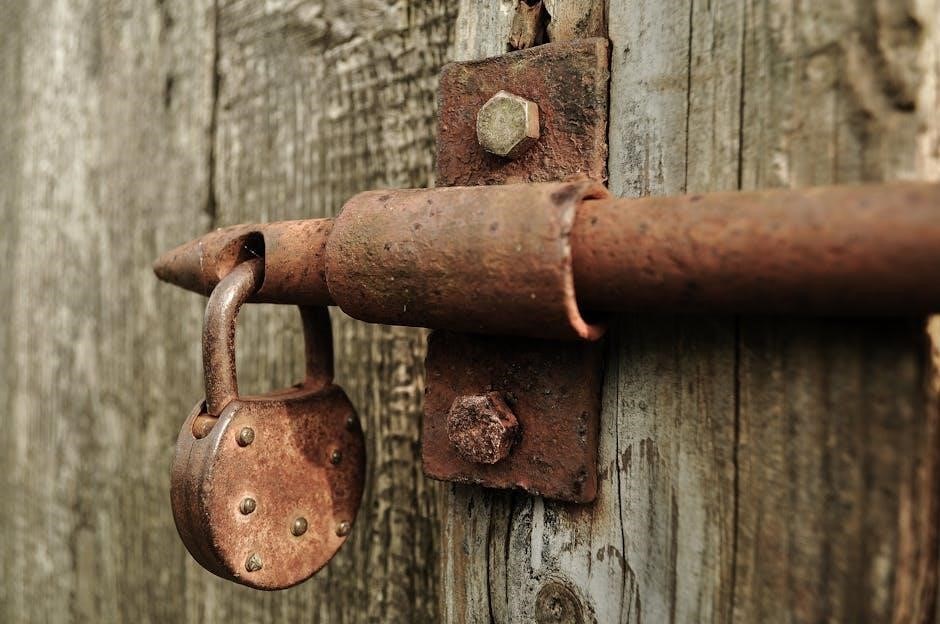
Slide bolt locks represent a fundamental approach to garage door security. These mechanisms typically consist of a metal bolt that slides horizontally to engage with a receiving bracket mounted on the door frame. They are relatively inexpensive and straightforward to install, making them a popular choice for basic security needs.
However, slide bolt locks are also among the least secure options available. Their vulnerability stems from their exposed nature; a determined intruder can often bypass them with minimal effort, potentially using a simple tool to force the bolt or manipulate the locking mechanism. Despite this, they serve as a visible deterrent and can provide a basic level of protection against casual attempts at unauthorized access. Proper installation, ensuring the bolt extends deeply into the receiving bracket, is crucial for maximizing their effectiveness.
Keyed Cylinder Locks
Keyed cylinder locks offer a step up in security compared to slide bolts. These locks utilize a key to operate a cylinder, engaging a bolt that secures the garage door. They provide a more robust defense against casual intruders, requiring a key for access, which adds a layer of complexity.
However, the security level heavily depends on the quality of the cylinder. Lower-quality cylinders are susceptible to picking or bumping, rendering the lock ineffective. Higher-security cylinders, featuring anti-pick and anti-bump mechanisms, significantly enhance protection. Installation requires precise alignment for smooth operation. Regular maintenance, including lubricating the cylinder, is vital to prevent corrosion and ensure reliable functionality. Consider the key control aspects – who has access and the potential for key duplication.
Garage Door Handle Locks with Internal Mechanisms
Garage door handle locks integrate a locking mechanism directly into the door handle assembly. Often resembling standard door handles, they offer convenient operation while providing a basic level of security. When activated, an internal bolt extends into the door frame, preventing the door from being lifted.
These locks are generally easier to install than keyed cylinders, often requiring only basic tools. However, their security is typically lower, as they can be vulnerable to forced entry with sufficient force. The strength of the handle and the internal locking components are crucial factors. Regular checks for wear and tear are essential, ensuring the handle and bolt operate smoothly. Consider supplementing these locks with additional security measures for enhanced protection.
Emergency Release Mechanisms & Security Implications
Garage doors require emergency release mechanisms for safety, allowing manual operation during power outages or malfunctions. Typically, a red cord hangs from the release lever, disconnecting the door from the opener. However, this accessibility presents a security vulnerability.
A determined intruder can easily use a coat hanger or similar tool to trigger the release from outside, bypassing the primary lock. Securing the emergency release mechanism with a zip tie or padlock (while still allowing internal access) can mitigate this risk. Regularly inspect the release mechanism to ensure it functions correctly, but remains tamper-resistant. Balancing safety and security is crucial when considering these systems.

Installation and Maintenance
Proper installation and consistent maintenance are vital for reliable function. Regular checks, lubrication, and addressing wear-and-tear ensure continued security and smooth operation.
DIY Installation Considerations
Attempting a DIY installation requires careful assessment of your skillset and the specific lock type. Thoroughly read and understand the manufacturer’s instructions before beginning. Ensure you have the necessary tools – drill, screwdriver set, measuring tape, and potentially a level.
Precise alignment is crucial for proper functionality; misaligned locks can be easily compromised. Consider the garage door material – wood, metal, or fiberglass – as it impacts the installation process and required hardware.
If you’re uncomfortable with drilling or modifying your garage door, or lack experience with basic home repairs, professional installation is strongly recommended; Incorrect installation can weaken the door’s security and void any warranties. Prioritize safety throughout the process, wearing appropriate eye protection and gloves.
Professional Installation Benefits
Engaging a professional for manual garage door lock installation guarantees expertise and precision. Technicians possess the knowledge to select the most appropriate lock for your door type and security needs. They ensure correct alignment and secure mounting, maximizing the lock’s effectiveness.
Professional installation often includes a thorough inspection of the garage door’s structural integrity, identifying potential weaknesses. This proactive approach can prevent future issues and enhance overall security.
Furthermore, professionals typically offer warranties on their workmanship and the installed lock, providing peace of mind. They handle any necessary modifications to the door without causing damage, and ensure compliance with local safety regulations. It’s a worthwhile investment for robust security.
Regular Maintenance for Optimal Functionality
Consistent maintenance is crucial for ensuring your manual garage door lock operates smoothly and reliably. Periodic checks for rust, corrosion, or physical damage are essential, addressing issues promptly to prevent malfunctions; Inspect the locking mechanism for smooth engagement and disengagement, ensuring no binding or sticking occurs.
Regularly test the lock’s functionality, simulating both locking and unlocking scenarios. This confirms the mechanism remains responsive and secure. Pay attention to any changes in operation, such as increased resistance or unusual noises.
Addressing minor issues proactively prevents costly repairs or replacements. A well-maintained lock contributes significantly to the overall security and longevity of your garage door system, offering continued peace of mind.
Lubrication and Component Checks
Proper lubrication is vital for the smooth operation of manual garage door locks. Utilize a silicone-based lubricant, avoiding oil-based products that attract dirt and grime. Apply lubricant to all moving parts, including the bolt, cylinder, and internal linkages, ensuring thorough coverage.
Regularly inspect the mounting hardware – screws and bolts – for tightness. Loose components compromise security and can lead to misalignment. Check for wear and tear on the locking mechanism itself, looking for bent or broken parts.
A visual inspection of the surrounding door area is also important, identifying potential vulnerabilities. Consistent checks and lubrication extend the lock’s lifespan and maintain optimal functionality.

Security Vulnerabilities and Enhancements
Manual locks present weaknesses against determined intruders. Reinforcing the door, adding supplemental locks, and integrating alarm systems significantly boosts overall garage security.
Common Weaknesses in Manual Locking Systems
Manual garage door locks, while providing a basic level of security, are inherently susceptible to several vulnerabilities. The simplicity of slide bolt locks and many keyed cylinder mechanisms makes them relatively easy to bypass with basic tools or techniques. Thin garage door panels, particularly older models, offer minimal resistance to forced entry, even with a locked bolt.
Furthermore, the locking point itself can be a weak spot; if the bolt doesn’t extend deeply into the door frame, it can be easily forced. Keyed locks are vulnerable to picking or, in some cases, key duplication. The accessibility of the locking mechanism from the exterior, even through a small gap, presents an opportunity for manipulation. Homeowners often overlook regular maintenance, leading to weakened components and compromised security over time. These factors collectively highlight the need for supplemental security measures.
Reinforcing Garage Door Security
Strengthening a garage door’s security, even with a manual lock, involves multiple layers of defense. Reinforcing the door itself is paramount; consider installing a metal brace to prevent panel bending during forced entry attempts. Upgrading to a heavier-duty bolt lock with a longer throw significantly increases resistance.
Adding a secondary locking mechanism, such as a deadbolt, provides an extra barrier. Securing the emergency release mechanism prevents unauthorized access via a coat hanger. Strengthening the door frame with metal plates around the lock and hinges adds substantial durability. Regularly inspecting and maintaining all components ensures optimal functionality. Combining these physical enhancements with heightened awareness and neighborhood watch programs creates a more robust security posture.

Combining Manual Locks with Additional Security Measures
Manual garage door locks are most effective when integrated with a broader security system. Consider installing motion-activated lights to deter potential intruders and illuminate the area. A visible security camera, even a dummy one, can act as a strong deterrent.
Garage door sensors that alert you to opening or closing activity provide real-time monitoring. Linking these sensors to a home security system offers professional monitoring and rapid response. Reinforcing the door with a metal brace and upgrading hinges further enhances physical security. Regularly testing the manual lock and all supplemental measures ensures continued effectiveness. A layered approach provides the most comprehensive protection for your home and belongings.

Bypassing Techniques & Countermeasures
Intruders may attempt forced entry or lock picking. Strengthening the door’s material and utilizing robust locking mechanisms are vital countermeasures for enhanced security.
Methods Used to Bypass Manual Locks
Manual garage door locks, while providing a basic level of security, are susceptible to several bypassing techniques. A common method involves simple forced entry, leveraging the often relatively thin materials used in garage door construction. A determined individual can sometimes kick or pry open the door, especially if the locking point isn’t reinforced. Lock picking, though requiring skill, is another potential vulnerability, particularly with simpler keyed cylinder locks.
Furthermore, vulnerabilities exist around the emergency release mechanism, designed for quick access in emergencies. If not properly secured, this release can be manipulated from the outside. Even seemingly secure slide bolt locks can be defeated with sufficient force or specialized tools. Understanding these methods is crucial for homeowners to implement effective countermeasures and bolster their garage door’s security.
Strengthening Against Lock Picking and Forced Entry
To mitigate lock picking risks, upgrading to high-security keyed cylinders is paramount. These feature advanced pin configurations, making them significantly harder to manipulate. Reinforcing the garage door itself is equally vital; steel plates around the lock and strike plate dramatically increase resistance to forced entry.
Longer screws for the strike plate, reaching into the door’s framing, provide a more secure anchor point. Consider a robust deadbolt-style lock in addition to the standard mechanism. Regularly inspecting and maintaining the door’s structural integrity – addressing any weaknesses in the wood or metal – is also crucial. Combining these measures creates a layered defense, substantially improving security.
The Role of Garage Door Material in Security
Garage door material significantly impacts its vulnerability to forced entry. Steel doors offer superior resistance compared to wood or aluminum, providing a stronger barrier against attacks. However, even steel doors can be compromised if the surrounding frame is weak. Reinforcing the door frame with steel supports is a crucial step in bolstering security.
Wooden doors, while aesthetically pleasing, are more susceptible to splintering and breaking. Composite materials offer a balance of strength and insulation, but their security level varies. Regardless of the material, ensuring a solid core and robust construction is essential. A secure lock is only as strong as the door it’s attached to.

Future Trends in Garage Door Locking
Integration is key: smart lock technology will increasingly complement manual systems, offering enhanced control and monitoring for improved garage door security.
Smart Lock Integration with Manual Systems
Bridging the gap between traditional security and modern convenience is a growing trend. Integrating smart lock technology with existing manual garage door locking mechanisms offers a layered approach to home protection. This doesn’t necessarily mean replacing manual locks entirely; instead, it involves augmenting them with smart features like remote control, activity monitoring, and temporary access codes.
For example, a homeowner could retain a slide bolt lock for a physical barrier while adding a smart lock that allows them to check door status via a smartphone app. Such systems can send alerts if the door is left open or if tampering is detected. This combination provides both a readily available manual override and the benefits of connected home technology, enhancing overall security and peace of mind.